Behind the Craft
Craft Stories
Every leaf and vessel has a story. Here we share the ancient processes, the hands that shape them, and the philosophy that guides each creation.
Artisan Profile
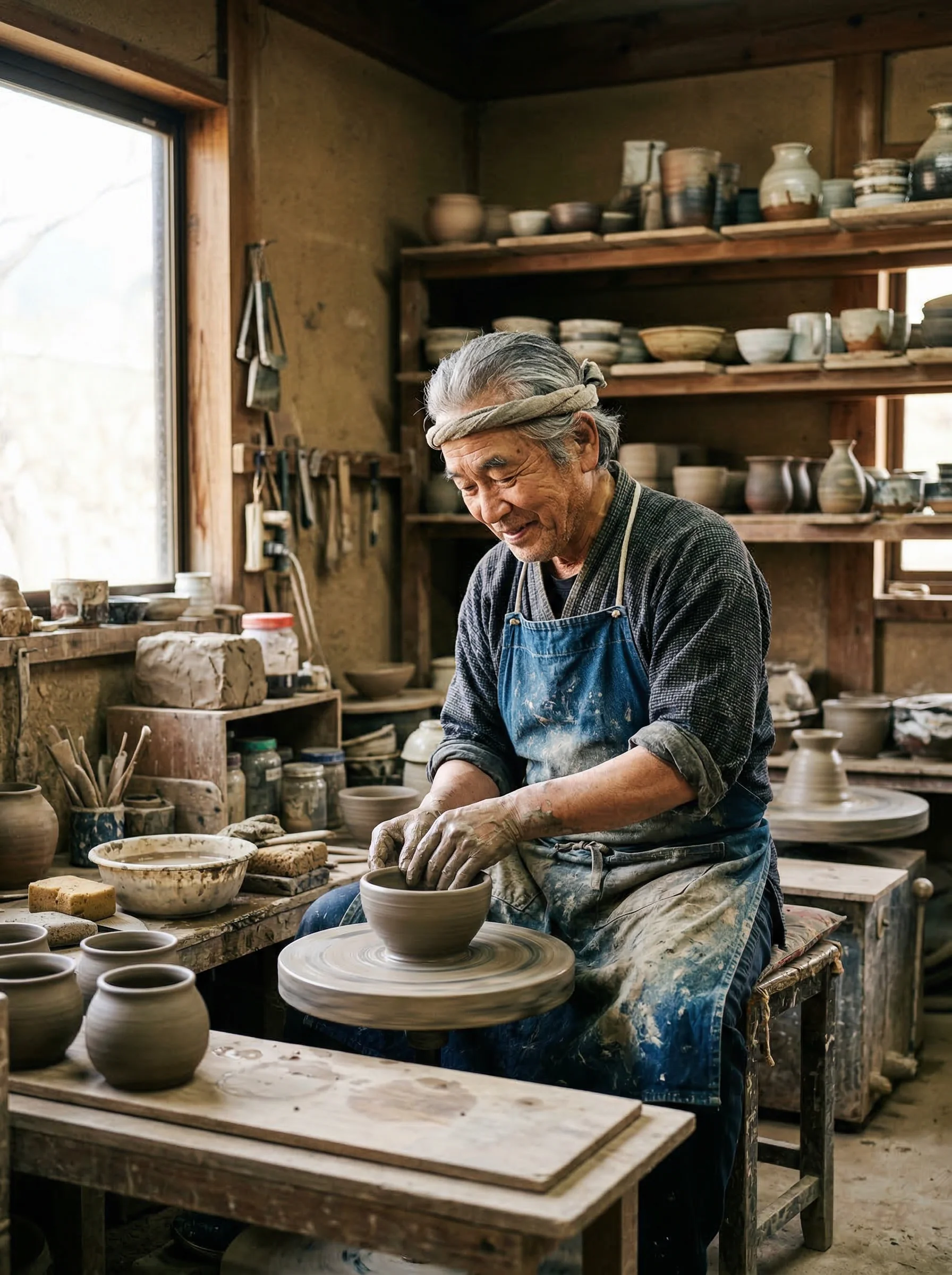
Takeshi Yamamoto: The Fire Within
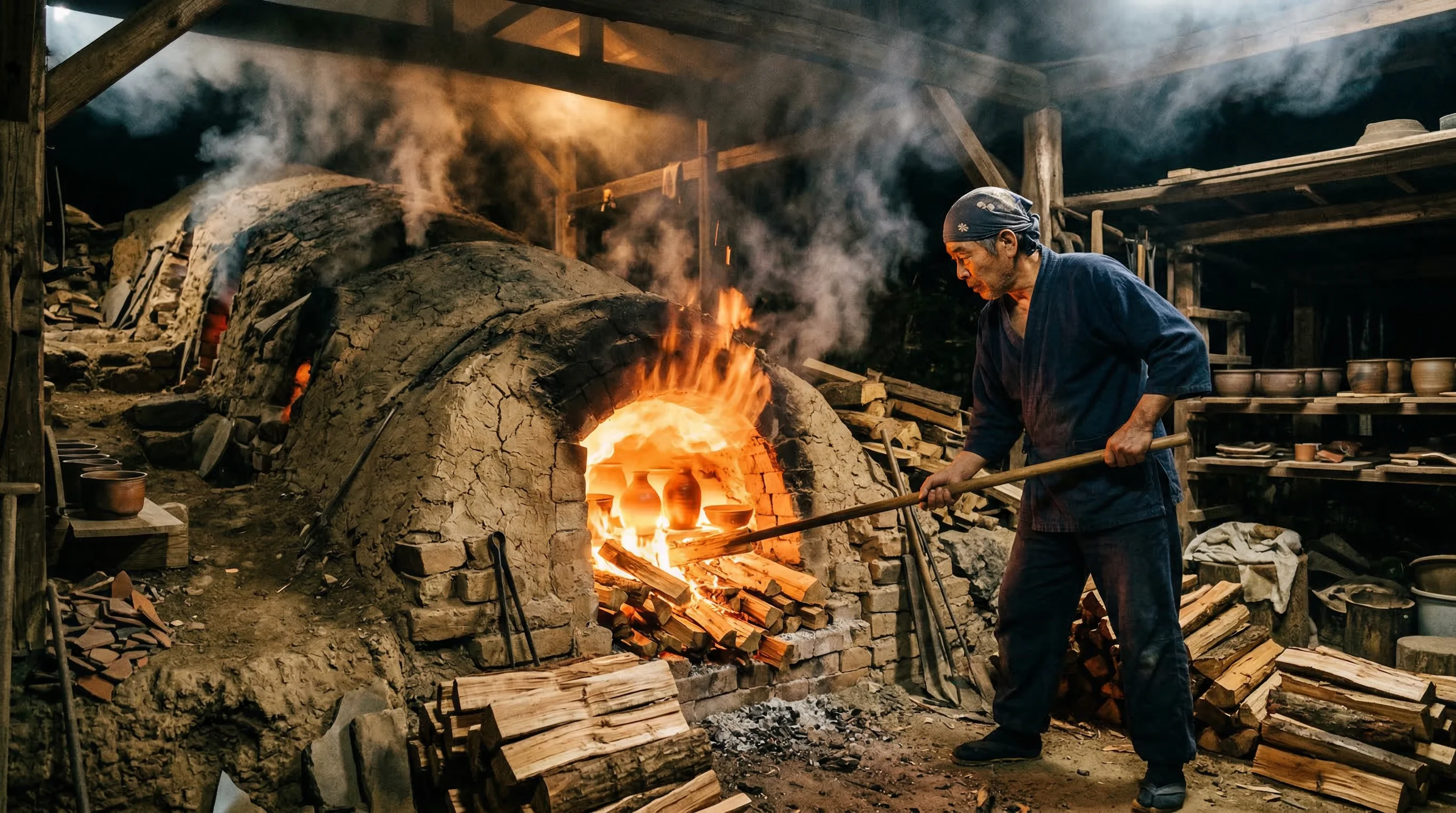
For Yamamoto-san, every firing is a collaboration with the elements. His family's Shigaraki kiln, nestled among cedar forests, has been active for over 80 years. The wood-fired process takes five days of continuous attention, feeding the anagama kiln around the clock.
“I do not create the glaze,” he explains. “The fire and the ash create it. My role is to prepare the clay and trust the process. Each piece that emerges is a conversation between my intention and nature's will.”
His tea bowls carry the distinctive marks of flame—natural ash deposits that create unique patterns no human hand could replicate. This is the essence of wabi-sabi: finding profound beauty in imperfection.
The Process
Five Days of Fire: The Anagama Kiln
The anagama is among the oldest kiln designs in Japan, a single-chamber wood-fired tunnel where flames dance unpredictably around each piece. The firing begins slowly, gradually building over five days and nights to temperatures exceeding 1,300 degrees Celsius.
Throughout this marathon, the kiln must be fed constantly—a single log every few minutes. Wood ash from the fuel settles on exposed surfaces, melting into a natural glaze that ranges from amber to deep olive. No two firings produce the same results, and no two pieces are ever alike.
After the firing, the kiln cools for another five days before the door is opened. This moment, called kamadashi, carries the anticipation of an artist unveiling their work for the first time.
Artisan Profile
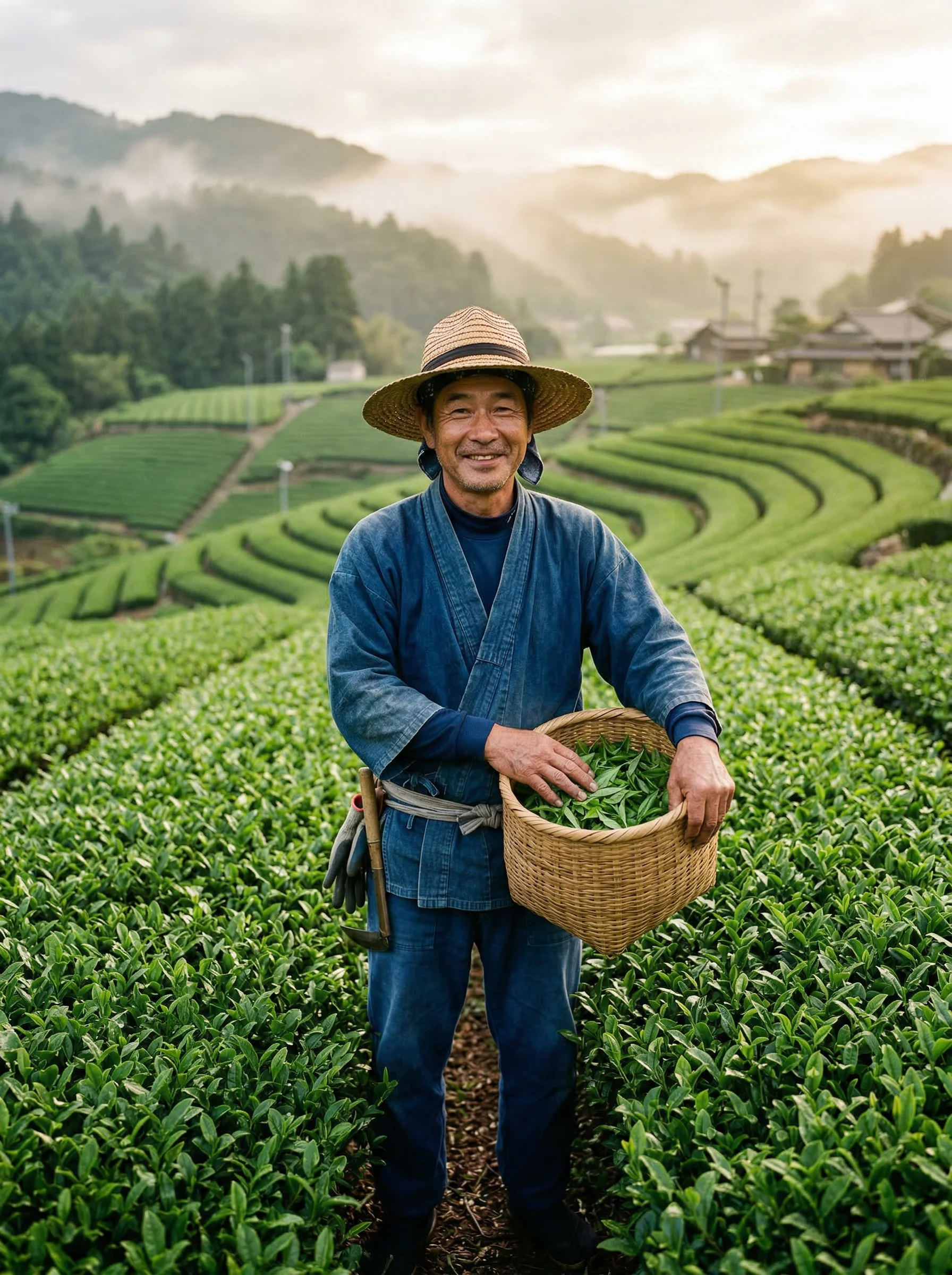
Hiroshi Tanaka: Guardian of the Garden
The Tanaka family has cultivated tea on the same hillside in Uji since 1892. Hiroshi-san is the fifth generation to tend these rows, and he carries a deep reverence for the traditions his great-great-grandfather established.
“My grandfather taught me that the best tea is grown with patience, not technology,” he reflects. His approach to shade-growing gyokuro follows ancient methods: bamboo structures draped with reed screens that filter 90% of sunlight for twenty days before harvest, forcing the leaves to produce extraordinary amounts of amino acids.
The result is a tea of unmatched sweetness and depth—a liquid expression of Uji's mineral-rich soil, its misty climate, and five generations of accumulated wisdom.
Artisan Profile
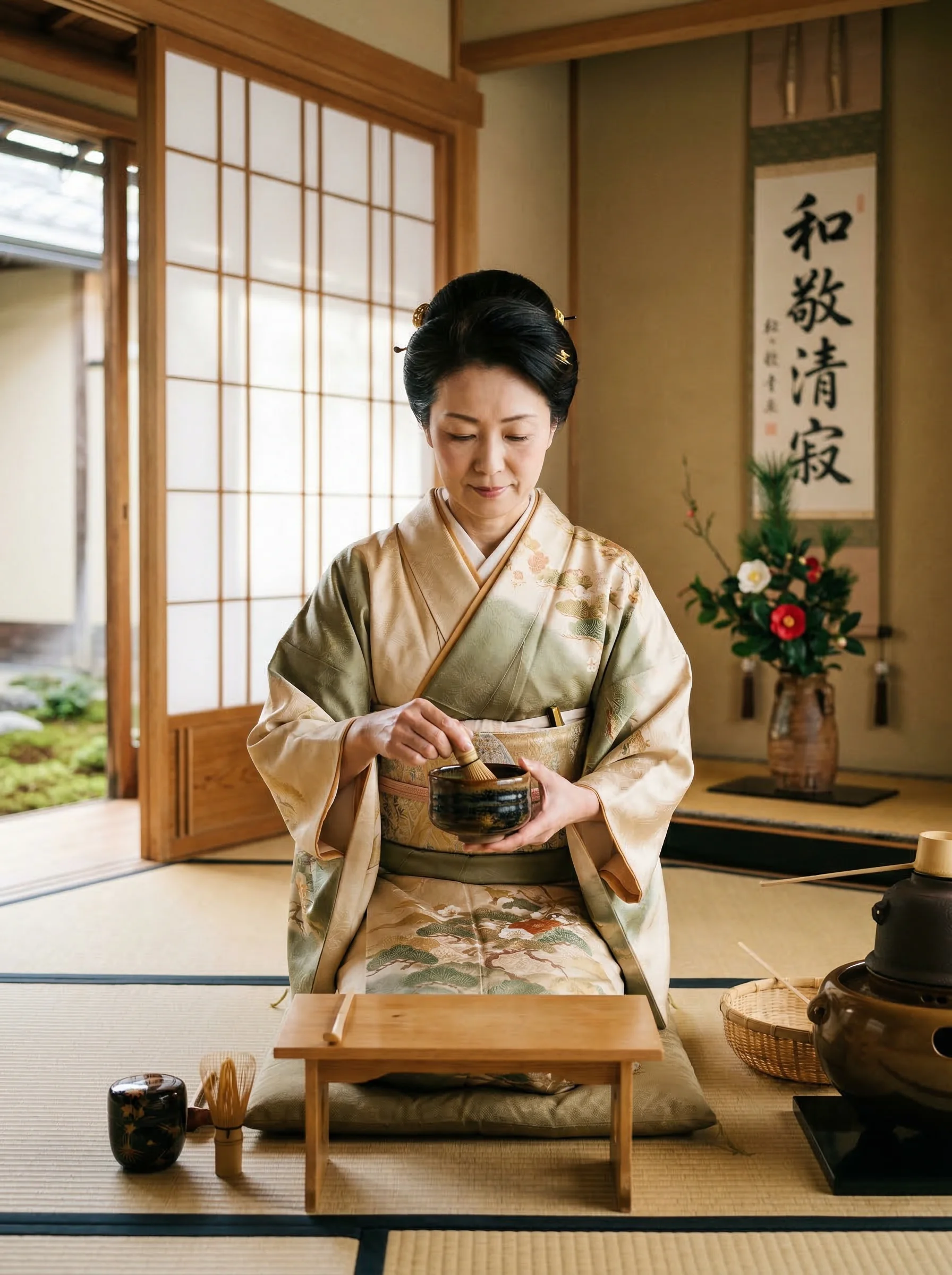
Keiko Fujimoto: The Way of Tea
Fujimoto-sensei began her study of chado at age twelve and received her teaching certification from the Urasenke school in her early twenties. Over three decades of practice have refined her understanding of tea ceremony from ritual into a living art.
“Ceremony is not about perfection,” she teaches her students. “It is about sincerity. When you whisk the tea with your whole heart, the guest will feel it. When you choose a bowl that speaks to the season, the moment becomes poetry.”
Fujimoto-sensei personally selects and evaluates every tea and ceramic pairing we offer, ensuring that each combination honors the principles of harmony, respect, purity, and tranquility that define chado.
From Leaf to Cup
The Tea Journey
Cultivation
Shade-growing begins 20 days before harvest. Reed canopies filter sunlight, increasing chlorophyll and amino acids in the leaves for deeper flavor.
Harvest
Only the tenderest first-flush leaves are hand-picked during the spring ichiban-cha season, when flavor compounds are at their peak concentration.
Processing
Leaves are steamed within hours of picking to halt oxidation, then rolled, dried, and sorted. Matcha leaves are stone-ground in granite mills at a rate of 40 grams per hour.
Curation
Our tea master Fujimoto-sensei tastes every lot, selecting only those that meet our standards for aroma, body, finish, and the intangible quality she calls kokoro—heart.